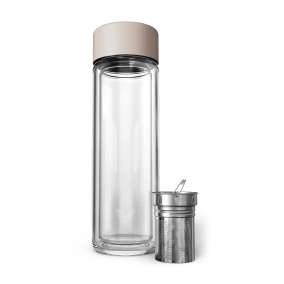

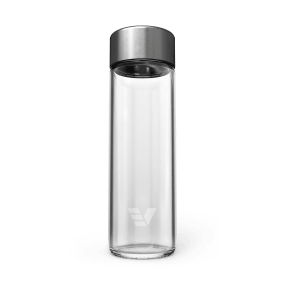


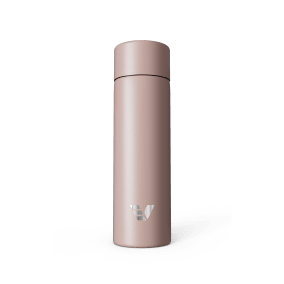
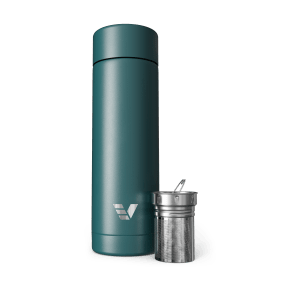







That makes sense once you picture how a dishwasher works: a single pump pushes the same hot water up to both spray arms. The top and bottom racks are being sprayed with the same water at the same temperature.
The only time the bottom runs significantly hotter is during the heated-dry phase on the older exposed-coil machines. In this specific case the heat can damage heat-sensitive items like many plastics and painted coatings. Uncoated borosilicate glass and stainless steel don’t care. Both shrug off every temperature a dishwasher can produce.
Why the “Dishwasher Safe – Top Rack only” recommendation is misleading
by Tim Bligh | July 12, 2026
Water bottles often carry labels for cleaning that state “Dishwasher Safe – Top Rack only”. Here’s a breakdown on why this recommendation for water bottles is not accurate and is often misleading.
“Is it safe to put these water bottles on the bottom rack? They’re too tall for the top rack. Where am I supposed to put them?” We get a version of this question almost every month.
It’s a fair question and it is common to see “Dishwasher Safe - Top Rack only” on many products. It sounds like helpful cleaning advice but it isn’t accurate. From my experience it raises more questions than it answers and if applied to most water bottles is misleading.
Let me break down why.


“Top Rack only” isn’t a cleaning instruction
Think about what that label actually tells you. It just says “put it up the top” and implies you are good to go.
The things that genuinely affect whether your water bottle comes out of a dishwasher clean are determined primarily by the position and orientation of the bottle parts, detergent used and the correct cycle. We go through the full routine step by step here: How to clean a water bottle in the dishwasher without ruining it.
Most importantly unless your water bottle happens to be less than 15cm (6 inches) tall it cannot be cleaned properly on the top shelf of most dishwashers. Not ideal.
Where the rule came from
The “Dishwasher Safe - Top Rack only” rule first came from instructions on using a specific type of dishwasher that is now much less common.
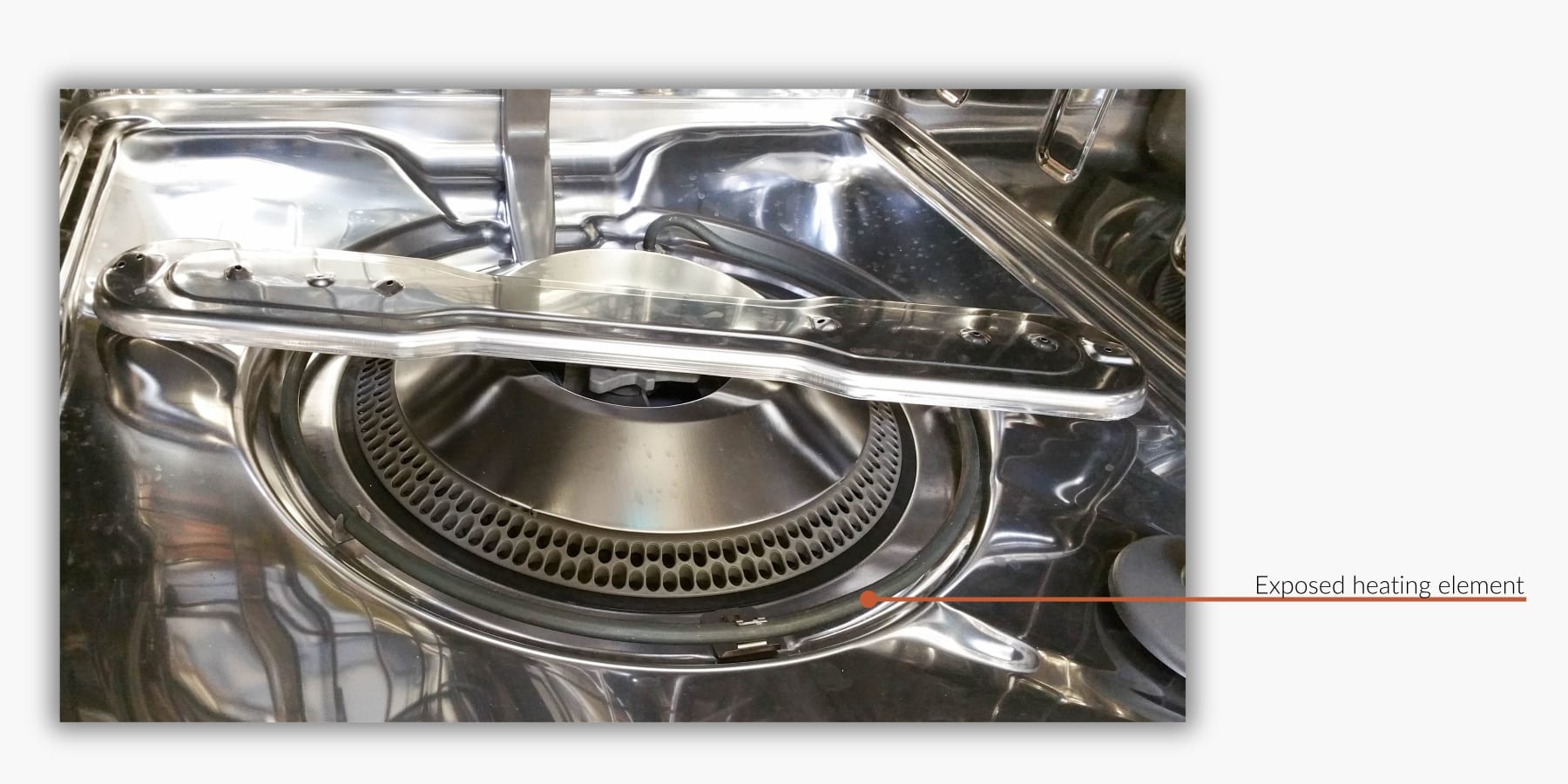
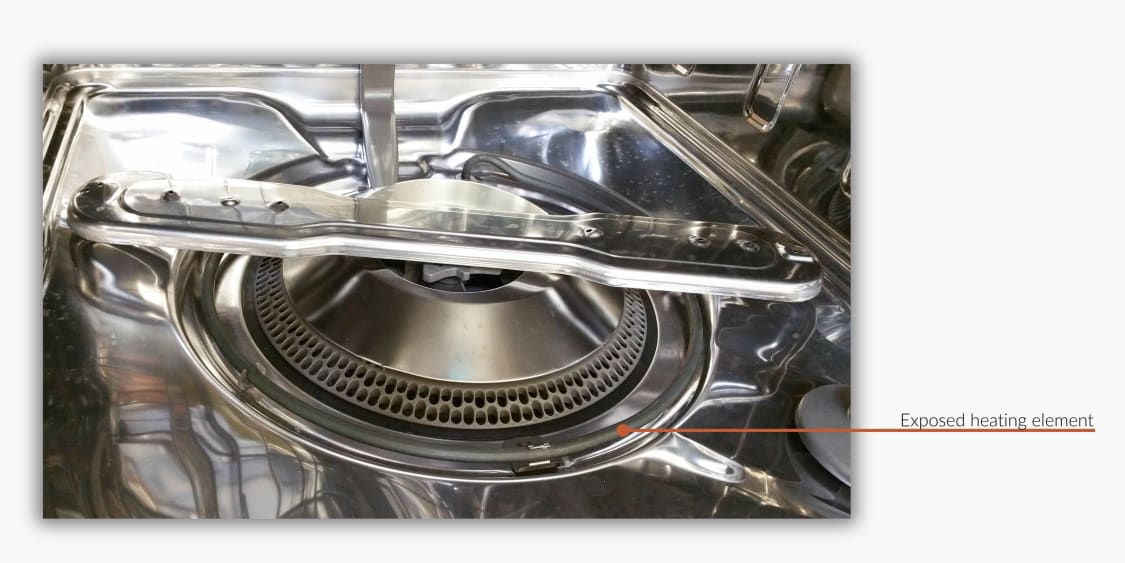
These older style dishwashers have an exposed metal heating coil sitting above the floor of the tub. It looks a bit like the grill element in an electric oven. During the drying cycle that coil gets seriously hot (we’re talking 120-180°C/250-360°F at the surface) and anything heat-sensitive sitting right above it would warp or melt. Plastic containers, melamine plates, that sort of thing. The fix was simple: keep meltable stuff up the top, away from the coil.
That’s the entire origin of the rule. It was never about uncoated borosilicate glass or stainless steel. It was about keeping soft plastics off a hot element.
The rule doesn’t apply to most modern dishwashers
The majority of dishwashers worldwide no longer have an exposed heating element in the base.
In Europe, UK, New Zealand and here in Australia condensation drying has been the standard for years. Brands like Bosch, Miele, Fisher & Paykel, SMEG, Samsung and LG don’t dry with a glowing coil at all — they heat the water through a concealed heating element. There’s no exposed element for anything to melt on. North America is the last stronghold of the old exposed coil machines and are being phased out steadily as hidden-element designs take over.
So for most people reading this, the “Dishwasher Safe - Top Rack only” doesn’t apply to their dishwasher. The hot exposed coil isn’t there.
During the wash and rinse cycle, both racks are the same temperature
A fun fact: A field study put temperature loggers on the top and bottom racks of 103 home dishwashers and ran them through full cycles. During the actual wash and rinse, the two racks tracked within a fraction of a degree of each other.*
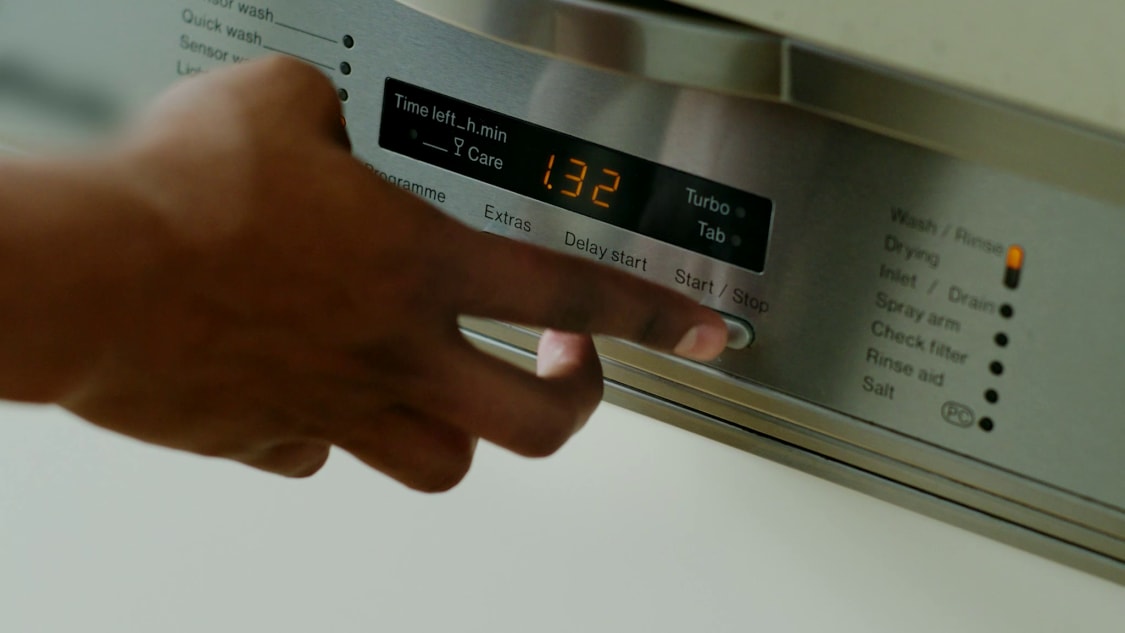
The obvious problem: your bottle is too tall for the top rack
Most water bottles are too tall to stand upright in the top rack unless it is a very small bottle (less than 15cm/ 6in). So the bottle ends up lying on its side instead.
And a bottle lying on its side is about the worst possible position for cleaning it.
For a dishwasher to clean the inside of a bottle, the water has to get up inside the neck and flush the walls. Lying flat on the top rack, that can’t happen — the spray skims past the opening, water pools in the bottle and just dribbles out, and the inside barely gets touched. You pull it out, tip the puddle into the sink, and wonder why it still smells.
To clean a tall bottle you need it mouth-down and standing close to vertical, so the jets can drive up into it and the water can then drain straight back out. That’s generally only possible to achieve on the bottom rack, where there’s the height to invert the bottle.
So how should you clean a water bottle in the dishwasher?
Here’s a four-step routine that actually works:
- Check Before you Load. Make sure the bottle and its parts are genuinely dishwasher safe. Some are only rated up to a maximum temperature, and some have parts that shouldn't go in at all. Follow the water bottle user instructions. If you cannot get any instructions but it’s labelled “Dishwasher safe” this is a good rule of thumb depending on what your bottle is made from:
a) Uncoated (no paint) stainless steel and borosilicate glass parts don't care about heat — any cycle.
b) Plastic parts, components with coatings (paint) and most lids need a gentler touch — use a lower temperature cycle (maximum 55°C/130°F) and always skip the heated-dry phase if your machine has an exposed coil. - Take it Apart. Remove the lid, straw and any removable components, and open any seals or flip-top spouts. Leaving it assembled is how you end up with mould parties in crevices you can't see.
- Position Like a Pro. Face the opening downwards and close to vertical so it sits in the path of the spray jets. Load the parts so water can flow through them and drain freely.
- Get the Detergent Right. Use only dishwasher detergent (powder or tablets) recommended by your machine’s manufacturer. Don’t overdose it. Too much detergent actually cleans worse (the suds cushion the spray) and is harsh on coatings.
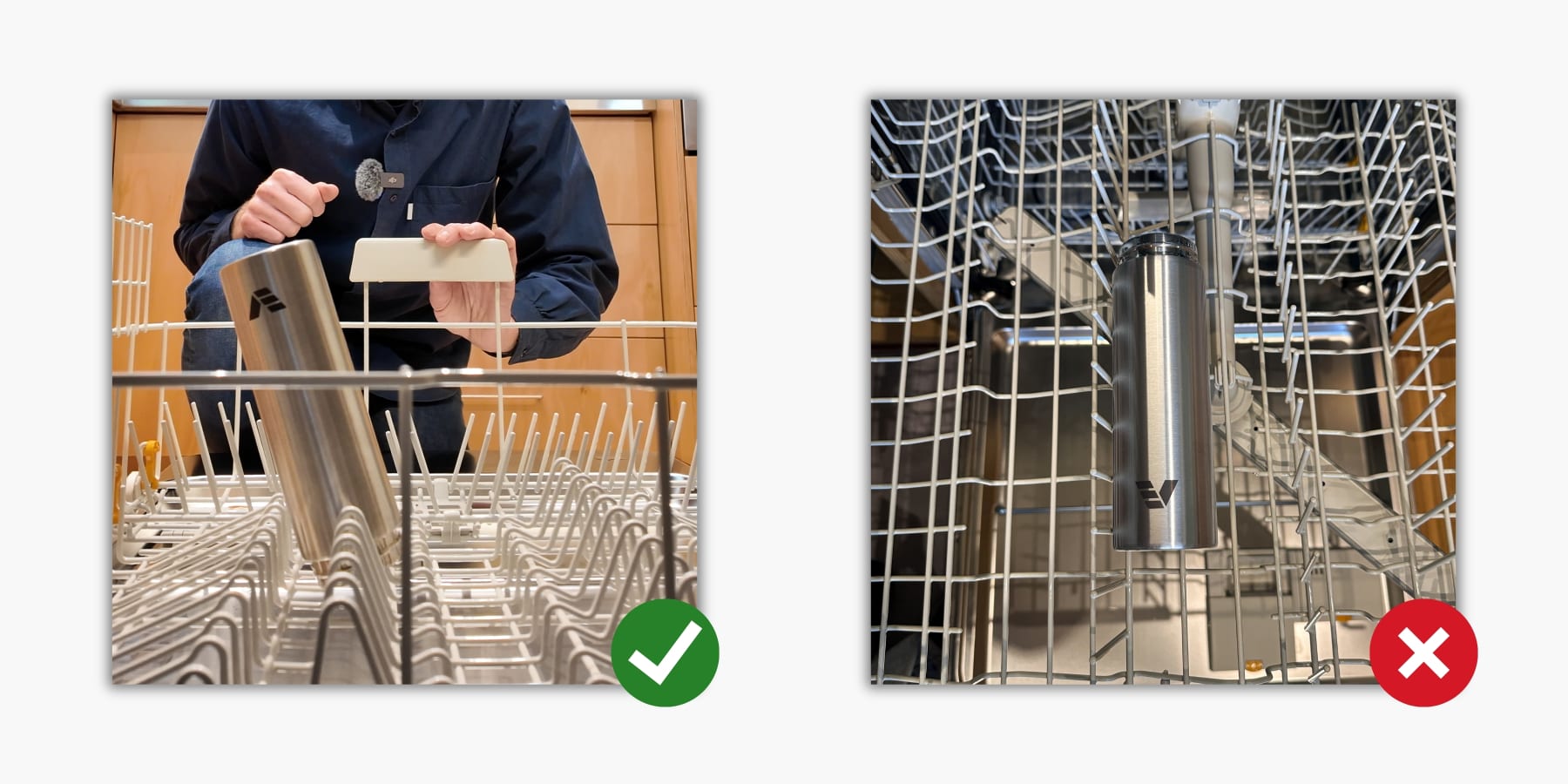
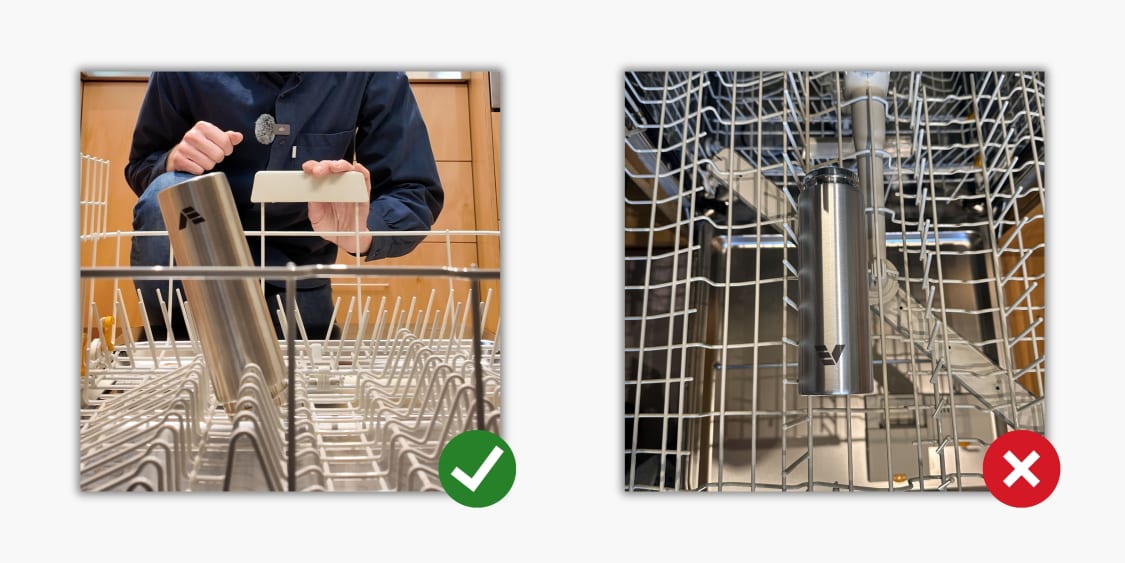
We go through the full routine step by step here: How to clean a water bottle in the dishwasher without ruining it.
The Bottom Rack
For most modern dishwashers, the bottom rack is perfectly fine for cleaning water bottles. Check your cycle temperature, positioning and use the right type and amount of detergent and you are good to go.
Next time a normal height water bottle label tells you “Dishwasher Safe – Top Rack only” read it for what it really is: a leftover rule that is just misleading.
Reference
* Sahai, D., Peterson, E. & Li, Y. (2015). Microbiological Assessment of Utensils Cleaned by Domestic Dishwashers in Ontario Small Establishments. Food Protection Trends, Vol. 35, No. 3, pp. 185–195. International Association for Food Protection. https://www.foodprotection.org/files/food-protection-trends/May-Jun-15-sahai.pdf
Related blog posts

by Tim Bligh | July 27, 2026How to make sure your next water bottle fits your car cup holder

by Bec Bligh | March 18, 2026How to Make the Perfect Cold Brew at Home


by Tim Bligh | November 5, 2025Water bottle smells - features to ensure an odour free water bottle